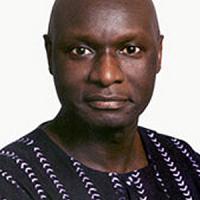
Olara Otunnu
Uganda
Olara A. Otunnu is the president of the Uganda's People's Congress and will be a candidate in the 2011 presidential elections.
Professional Information
Biographical Information
Olara Otunnu
(At a Glance)
Gender: male
Place of Origin: Uganda
Biographical Profile
For over three decades, Mr. Otunnu has held several diverse leadership positions, for which he has received wide acclaim for demonstrating outstanding political and diplomatic leadership, vision, innovation, and courage. The breadth and depth of that experience is exceptional. This profile provides a sketch of that itinerary.
Leadership Positions
The leadership positions Mr. Otunnu has held include:
- United Nations Under-Secretary General and Special Representative for Children and Armed Conflict, 1998 - 2005.
- President, International Peace Academy (now IPI), 1990 - 1998.
- President of the United Nations Security Council, 1981.
- Uganda's Representative to the UN Security Council, 1981 - 1982.
- Chairman of the UN Commission on Human Rights, 1983 - 1984.
- Minister of Foreign Affairs (Uganda), 1985 - 1986.
- Uganda's Ambassador and Permanent Representative and to the UN, 1980-1985.
- Vice-President of the UN General Assembly, 1982 - 1983.
- Chairman of the UN General Assembly Credentials Committee, 1983-1984.
- Chairman of the Contact Group on Global Negotiations, 1982-1983.
- Chairman, Group of 77 for Law of the Sea Negotiations, 1980 - 1981.
- Chairman of the Drafting Committee of the Ministerial Meeting of Non-Aligned Movement, 1983.
- Secretary General, Uganda Freedom Union, 1976 - 1980.
- Delegate, Moshi Unity Conference on Uganda, 1978.
- Member, Uganda National Consultative Council (Uganda's interim government, following the removal of the Idi Amin regime), 1979 - 1980.
- President, Makerere University Students Guild (students' union), 1972 - 1973.
- Member, Makerere University Council (university governing body), 1972-1973.
He currently holds the following positions:
- President, LBL Foundation for Children.
- World's Children's Ombudsman (selected by a worldwide network of over 12 million children).
Membership of Major Boards
Mr. Otunnu has been very active in many civic activities and organisations, serving on the Boards of several major international institutions. Currently he serves on the following Boards:
- Aspen Institute.
- International Peace Institute (formerly IPA)
- Member, Club of Rome.
- Jury for the Hilton Humanitarian Prize.
- Jury for the John P. McNulty Prize.
- Patron for the World's Children's Prize.
- Aspen France.
Previously, he has served on the Boards of:
- Carnegie Endowment for International Peace
- International Selection Commission of the Philadelphia Liberty Medal.
- Carnegie Corporation of New York.
- International Crisis Group.
- Council of African Advisers of the World Bank.
- Hampshire College.
- International Patrons of the Refugee Studies Programme at Oxford University.
- Advisory Committee of the Stockholm International Peace Research Institute (SIPRI).
- Aspen Italia.
- Board of Trustees of the United Nations Institute for Training and Research (UNITAR).
- Henry Dunant Centre for Humanitarian Dialogue in Geneva
- Regional Security Steering Committee of International Institute of Strategic Studies (IISS), London
Membership of Major International Commissions
Mr. Otunnu has been a member of several important independent international commissions, most of which have focused particularly on issues of Peace and Security, Human Rights, Conflict Management, Reform of the UN, and North/South Relations. These commissions include:
- Carnegie Commission on Preventing Deadly Conflict, 1994 - 1997.
- Commission on Global Governance, 1992-1995.
- Group on Rethinking International Governance, 1986 - 1990.
- International Panel on Management and Decision-Making in the United Nations (1986-1987).
- United Nations Group of Experts on New Concepts of International Security, 1984 - 1985.
- Commonwealth Group of Experts Study Group on the Security of Small States, 1984-1985.
- International Task Force on Security Council Peace Enforcement.
Experience of Leading and Managing Organisations
Mr. Otunnu has led and managed diverse and important organisations; during his tenure, he has transformed and led them to new levels of achievements. Here are some examples:
- As UN Special Representative for Children and Armed Conflict, he developed and led a particularly ambitious international campaign; he put in place a comprehensive body of standards; and he instituted a groundbreaking compliance mechanism (SC Resolution 1612). Remarkably, all this was accomplished in spite of very limited resources in terms of budget and staff.
- As president of International Peace Academy, he transformed the organisation - its role, programmes, budget and fund-raising, staff, and physical premises. He left behind a reinvented institution with new highly-acclaimed programmes, greatly increased resources (including much-expanded budget and a new endowment), top calibre and diverse staff, and a great reputation and profile.
- As Minister of Foreign Affairs, he carried out a major reorganisation of the ministry, to reward performance and professionalism, and established transparent criteria for promotions and postings.
- When he took over as Uganda's ambassador to the UN, following the fall of Idi Amin, he quickly reorganized and repositioned Uganda Mission to the UN, making it one of the most engaged and respected at the UN.
Engagement and Experience concerning Human Rights and Humanitarian Issues
Mr. Otunnu has been actively engaged in the fight for and the promotion of human rights, in various capacities, for most of his adult life.
- As students' union president at Makerere University and as Secretary General of Uganda Freedom Union, Mr. Otunnu was a key leader in opposition to the Idi Amin regime.
- As university professor, he has taught courses on Human Rights, at Albany Law School and at American University in Paris.
- As Ambassador to the UN in the 1980s, Mr. Otunnu was an early supporter and sponsor of the proposal for the establishment of the position of UN High Commissioner for Human Rights; this was at a time when this idea was very controversial and appeared utopian. He participated in negotiations on the establishment of this position in both the General Assembly and the Commission on Human Rights.
- Mr. Otunnu has served as Chairman of the UN Commission on Human Rights. He also served for several years as Representative to the Commission; he is very familiar with the workings of the entire UN human rights machinery.
- Mr. Otunnu was an early and strong supporter of the proposal to establish the International Criminal Court, and participated actively in the negotiations which culminated in the Rome Statute.
- He is greatly solicited as a speaker and commentator on human rights issues. As UN Special Representative, he developed the rights and protection of children exposed to war into a major and visible concern within the overall human rights agenda.
- Mr. Otunnu has served as a member of several high-level international commissions; in each of these commissions, one of the key areas under review was the promotion of Human Rights.
- As UN Special Representative, he designed, developed and carried out one of the most ambitious and successful international human rights enterprises (i.e. ensuring the protection and rights of children exposed to armed conflict) - - raising awareness, placing the protection and rights of war-affected children on the agenda of the UN Security Council, developing a comprehensive body of legal standards, mainstreaming this issue within and outside the UN, and successfully instituting a ground-breaking compliance mechanism.
- He has undertaken extensive visits to many countries in the midst or aftermath of conflict; he has encountered firsthand on the ground many episodes and victims of grave violation of human rights, and he has borne witness to their suffering.
Engagement with Regional Organisations
Over the years, in various capacities, Mr. Otunnu has reached out and systematically engaged regional organisations, particularly on issues of Peacekeeping, Human Rights, Conflict Management, and Development. He is very familiar and has worked closely with the following organisations:
- European Union (EU);
- African Union (AU), previously known as Organization of African Unity (OAU);
- Organization of American States (OAS);
- Organization for Security and Cooperation in Europe (OSCE);
- League of Arab Sates (LAS);
- European Parliament;
- EU/ACP Joint Parliamentary Assembly;
- Organisation of Islamic Conference (OIC);
- Group of 77;
- Non-Aligned Movement (NAM);
- Economic Community of West African States (ECOWAS).
Below are some examples of concrete outcomes which have emerged as a result of Mr. Otunnu's engagement with regional organisations:
- OAU Mechanism for Conflict Management (while head of IPA, Mr. Otunnu proposed this project to Secretary General of OAU and worked with him to develop the mechanism).
- European Union Guidelines for Children and Armed Conflict (this was a direct result of Mr. Otunnu's advocacy and collaboration with EU institutions).
- Designation of war-affected children as a distinct category of beneficiaries under the Cotonou Agreement on EU/ACP Partnership (Mr. Otunnu proposed and successfully lobbied for the inclusion of this provision).
- ECOWAS Peer Review Mechanism for Protection of Children (Mr. Otunnu proposed this and successfully lobbied ECOWAS heads of state for its adoption).
Outreach to and Engagement with Civil Society and NGOs
Mr. Otunnu has had a long and deep history of involvement with civil society and NGOs. He has served on the Boards of several such organisations.
- In particular, during his work as Chairman of the UN Commission on Human Rights, president of IPA, and UN Special Representative, Mr. Otunnu systematically reached out and engaged these groups in his activities. He regularly sought their inputs as well as briefed them; these consultations took place in New York, Geneva and Brussels, as well as during his many field trips.
- In his outreach over the years, he has actively engaged parliamentarians, women's organisations, communities of faith, scholars and researchers, and the youth.
Advocacy Roles
Mr. Otunnu has had extensive and highly successful experience in conducting international advocacy, including specifically on issues of Peace and Security, United Nations, Development, Human Rights, and the future of Africa. Examples of this experience include:
- As UN Special Representative, he was particularly effective in using international advocacy to raise public and official awareness, and to give the children-and- armed-conflict agenda high profile and visibility.
- Over the years, he has extensively engaged the media for advocacy, as interviewee, commentator, opinion-writer, and through press conferences.
- He is much solicited as a speaker and commentator on issues of Peace and Security, United Nations, Development, Human Rights, and Africa.
- As a member of several international commissions, he has been very active in promoting and publicizing the findings and outcomes of these commissions, most of which contain significant observations and recommendations specifically on Human Rights.
Academic Experience
Mr. Otunnu has taught Law at Albany Law School, and International Relations at American University in Paris. Human Rights was among the courses he taught at both institutions. Mr. Otunnu has held the following academic positions:
- Assistant Professor of Law, Albany Law School
- Visiting Professor, American University in Paris
- Visiting Fellow, Institut Francais des Relations Internationales, Paris
Law Practice
Mr. Otunnu has had the experience of practicing law, as associate in the law firm of Chadbourne and Parke in New York.
Publications
Mr. Otunnu has widely published articles in magazines, periodicals and newspapers. His articles have focused mainly on issues of international security, human rights, conflict management, protection of war-affected children, reform of the United Nations, the future of Africa, and globalization. He co-edited (with Professor Michael Doyle) the book, "Peacemaking and Peacekeeping for the New Century" (1998).
In Uganda's Service. Over the years, Mr. Otunnu has provided important leadership and service to Uganda, in various capacities. The roles include:
- President, Makerere University Students Guild (students' union), 1972 - 1973.
- As students' union president at Makerere University, Mr. Otunnu was a key leader in opposition to the Idi Amin regime. In tribute to Mr. Otunnu's leadership and his courageous role in spearheading the students' resistance against the Amin regime, the road linking the main University campus and Mulago Medical School is named Otunnu Highway.
- Member, Makerere University Council (university governing body), 1972-1973.
- Secretary General of the Uganda Freedom Union, an opposition organisation against the Idi Amin regime, 1976 - 1980.
- Delegate, Moshi Unity Conference on Uganda, 1978.
- Member, Uganda National Consultative Council (the interim government, following the removal of the Idi Amin regime), 1979 - 1980.
- Uganda's Ambassador and Permanent Representative to the United Nations 1980-1985.
- Uganda's Representative to the United Nations Security Council, 1981 - 1982.
- As president of the Security Council, he was responsible for breaking the deadlock and crisis over the election of UN Secretary General in 1981. He also invented the innovative system of straw balloting (commonly known as the Otunnu Formula), which has been used ever since in the election of the Secretary General.
- Minister of Foreign Affairs, 1985 - 1986.
- He played the key role in the Uganda Peace Talks (1985 - 1986), which culminated in the Nairobi Peace Agreement of December 1985.
- As Minister of Foreign Affairs, he carried out a major reorganisation of the ministry, to reward performance and professionalism, and established transparent criteria for promotions and postings
- Personal Assistant to Deputy Legal Adviser for East Africa Railways Corporation, 1971.
- News broadcaster (in Lwo) for Radio Uganda, 1971-1973
- While serving on the Board of the Carnegie Corporation of New York (1998-2007), he played a key role in establishing the "Partnership for Higher Education in Africa," a programme which provides special funding to a select group of African universities. His alma mater, Makerere University, is a major beneficiary of this funding programme, having received over US$40 million between 2000 and 2008.
- Mr. Otunnu has led the international campaign to expose and demand an end to the genocide in northern Uganda, as well as the dismantling of the 200 concentration camps into which 2 million people were forcefully moved for 15-20 years.
Birthplace and Home
- Mr. Otunnu's birthplace is Mucwini, Chua. He was raised in Mucwini, Arua, Anaka and Pece.
- In Uganda, the family home is in Pece, Gulu.
- In the United States, the home is in New York.
Languages
Mr. Otunnu's mother tongue is Lwo. He is also fluent in two international languages: English and French.
Education
Mr. Otunnu received his formal education at the following institutions:
- Mvara, Mucwini and Anaka primary schools.
- Gulu High School.
- King's College, Budo (on Queen's Scholarship)
- Makerere University.
- Oxford University (Overseas Scholar).
- Harvard Law School (Fulbright Scholar).
Source: Uganda People's Congress
Accomplishments
Other Accomplishments:
Below are some examples of major concrete initiatives undertaken by Mr. Otunnu, in his diverse leadership roles. These initiatives testify to his exceptional capacity and experience in providing Leadership, Political and Diplomatic Skills, Vision, and Innovation.
- He was responsible for breaking the deadlock and crisis over the election of UN Secretary General in 1981.
- As president of the UN Security Council in 1981, he invented the innovative system of straw balloting (commonly known as the Otunnu Formula), which has been used ever since in the election of the Secretary General.
- As chairman of the Credentials Committee of the UN General Assembly, he proposed and negotiated the formula that successfully resolved a major diplomatic showdown (concerning representation of Grenada) at the UN, during the Grenada crisis of 1983-84.
- He played the key role in the Uganda Peace Talks (1985 - 1986), which culminated in the Nairobi Peace Agreement of December 1985.
- As president of International Peace Academy, he transformed the role, programmes, funding and profile of the organisation; he assembled a highly talented and diverse staff, attracted major new funding, and built an endowment.
- He successfully incorporated the protection of war-affected children into the agenda of the UN Security Council and made it a major peace-and-security issue.
- He spearheaded the building of a comprehensive body of international rules and standards (e.g., Several UN Security Council Resolutions, culminating in Resolution 1612; relevant provisions of the ICC Statute; the Optional Protocol; relevant provisions of ILO Convention 182; relevant provisions of the African Charter on the Rights and Welfare of the Child; etc.) for the protection of war-affected children.
- He successfully led the campaign to incorporate several child-specific war crimes into the International Criminal Court Statute; these provisions are currently being applied in the first cases brought before the ICC.
- He was responsible for designing and establishing the role and deployment of Child Protection Advisers in UN and regional peacekeeping missions.
- He initiated and established the on-going public listing (Naming and Shaming) of parties responsible for committing crimes against children in situations of armed conflict.
- He proposed, designed and successfully lobbied for the adoption of the groundbreaking compliance regime for the protection of war-affected children, contained in UN Security Council Resolution 1612 (2005). The compliance regime formally establishes a comprehensive, international monitoring and reporting mechanism to document grave violations against children, identify and publicly list offending parties, holding them accountable, in order to ensure compliance 'on the ground' with international legal standards.
- He initiated and established "Voice of Children" radio programmes, for children and by children.
- As UN Special Representative, he established a systematic practice of obtaining specific commitments from parties to conflict, which then serve as benchmarks for monitoring their conduct.
- He proposed the idea of "Era of Application" campaign, and successfully applied this to the children-and-armed conflict agenda.
Award:
Mr. Otunnu has been widely acclaimed for his many outstanding and diverse contributions and achievements. He is the recipient of several major international prizes and awards, including:
- Harvard Law School Alumni Association Award, 2007.
- Global Award for Outstanding Contribution to Human Rights (India), 2006.
- Sydney Peace Prize, 2005.
- German Africa Prize, 2002.
- Distinguished Service Award, awarded by the United Nations Association of USA.
- Overseas Scholar, Oxford University.
- Fulbright Scholar, Harvard University.
- The United States of America has recognized Mr. Otunnu as a person of "extraordinary ability and talent", for which he has been granted the special O1 immigrant status, which is reserved for "few individuals who have risen to the very top of their field of endeavor".





 Music
Music